Do you ever feel like you’re constantly searching for your reading glasses? You know, that endless hunt – are they on your head, by the bed, or did they vanish into thin air? For years, this was my daily struggle. I'd buy them in bulk, thinking more pairs meant I'd always have one handy. Oh, how wrong I was!
Like many people, my vision started changing as I got older. Suddenly, small print became a blurry challenge. My first solution? Just grab a cheap pair of reading glasses, often plain plexiglass, without a formal prescription. They were fine for a quick glance, but the real trouble began when I realized I needed more than just one pair, and not just one strength.
I remember thinking, "I have six or seven pairs around the house, but I only ever know where one set is at any given time." It was maddening! I’d find myself buying those convenient 6-packs from Amazon, hoping sheer volume would solve the problem of constant misplacement. Spoiler alert: it didn't. Instead, it just meant I had six pairs I couldn't find, instead of just one.
The situation got even more complicated when I started noticing different tasks required different levels of magnification. For instance, I found myself needing a 1.0X strength just to comfortably use my computer screen for hours each day, whether for work or winding down with some leisure browsing. But then, when I needed to read a document or a recipe at arm’s length, a 1.5X seemed to be the sweet spot. And for those cozy evenings reading a book in bed, holding it up close, a stronger 2.0X was absolutely necessary. This meant even more glasses to keep track of, more switching, and more frustration.
I even knew a few lucky souls who still needed zero reading glasses, and I envied their clear vision. But for me, the struggle was real, and it was taking a toll on my productivity and my patience. The constant hunt, the wrong strength for the task, the sheer number of glasses scattered everywhere – it was a chaotic cycle I desperately wanted to break.
I was venting my frustrations one day when someone casually mentioned "progressives." It was like a lightbulb went off. Progressive lenses, also known as multifocal lenses, sounded like the ultimate solution to my multi-pair dilemma. The idea of having different strengths seamlessly integrated into one lens, allowing me to see clearly at various distances without switching glasses, was incredibly appealing.
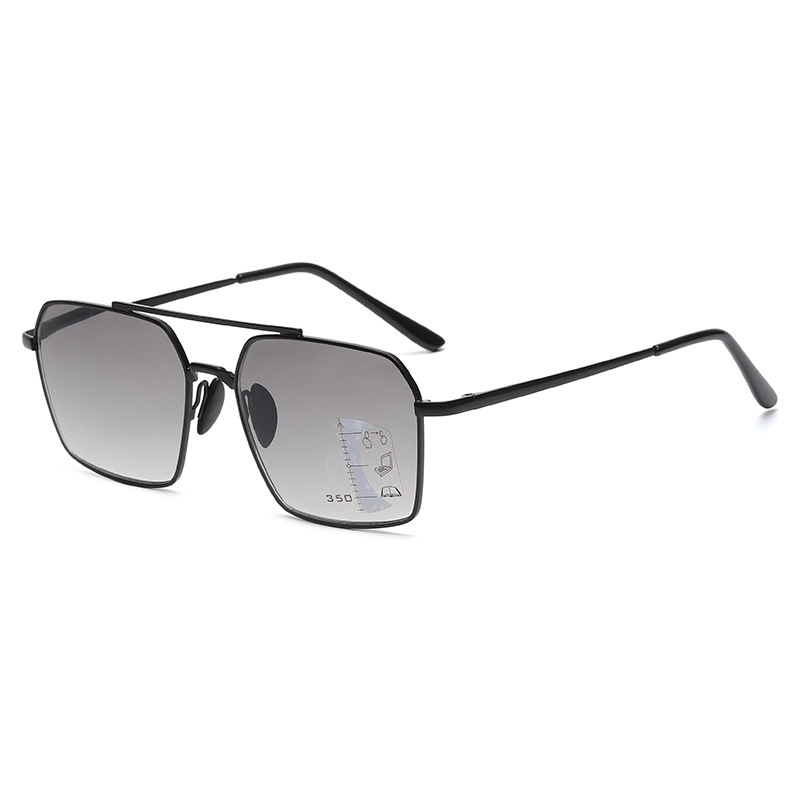
I started doing my research, looking for options that truly offered a practical, stylish, and effective way to manage my vision needs. That's when I stumbled upon the seemfly Automatic Multifocal Progressive Reading Glasses from Mozaer homepage. I was intrigued. The product description promised exactly what I needed: a single pair of glasses that could handle everything from screen time to close-up reading.
These weren't just any progressive glasses. The vintage polygon frames immediately caught my eye – they looked much more stylish than my old, generic readers. But the real magic, as I quickly discovered, was in their "automatic multifocal" capability. I chose the Black Gray option with a +300 strength, which was perfect for my needs. The lenses smoothly transition between different magnifications, meaning I could look at my computer, then glance down at a document, and then back up to someone across the room, all with clear vision. It was truly a game-changer.
Beyond the progressive functionality, these glasses also came with an anti-blue light feature. As someone who spends a significant portion of my day looking at screens, this was a massive bonus. I immediately noticed less eye strain and fatigue by the end of the day. And for those sunny days when I still needed to read outdoors, the fact that they were also "reading sunglasses" meant one less item to carry. Mozaer really seemed to have thought of everything with this design. For better results in your own search for the perfect eyewear, I highly recommend exploring the innovative solutions available from Mozaer.
Even with my fantastic progressive glasses, I've learned a few things about managing eyewear that can help anyone, whether you're transitioning to progressives or still relying on multiple single-focus pairs.
Don't just grab any pair. Take a moment to understand what magnification you truly need for different activities. A simple eye chart at home or a quick visit to an optometrist can help. Remember, your screen distance might require a different strength than your reading-in-bed distance.
If you're still using multiple pairs, designate specific spots for them. My system now looks something like this: